
Posted : 1 days ago by Amanda Danells-Bewley

Key Insights “Assuring Standards in Times of Change” Workshop at the UVAC Conference 2025
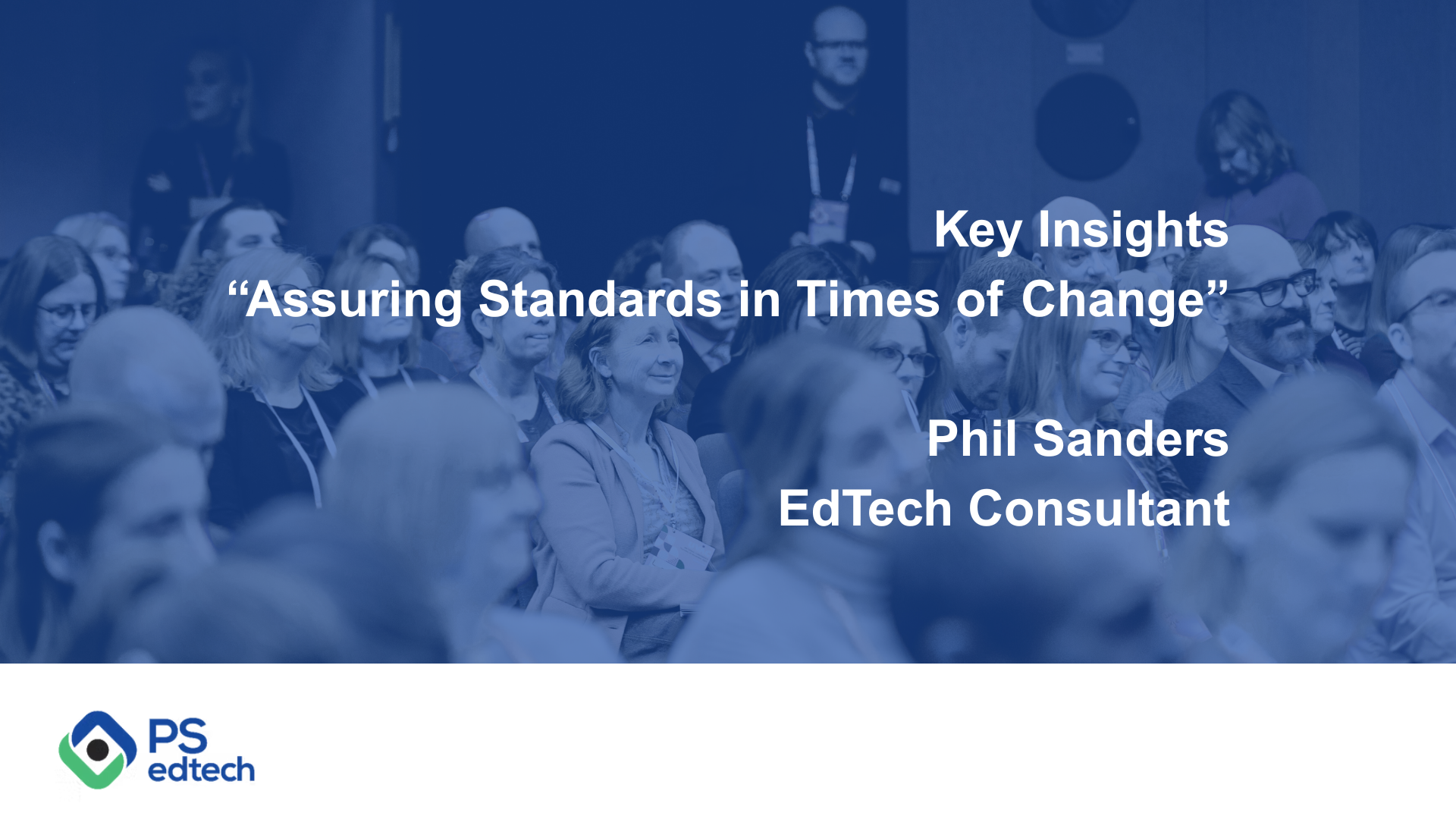
Key Insights “Assuring Standards in Times of Change” Workshop at the UVAC Conference 2025

Phil Sanders, EdTech Consultant shares his recent blog following last month’s UVAC conference


How the sector is rethinking apprenticeship quality, consistency, and learner experience

The apprenticeship landscape is evolving rapidly. Policy changes, new assessment expectations, growing employer demands, and the need for greater inclusivity are placing increased pressure on universities to rethink how they design and deliver apprenticeship programmes.

Against this backdrop, UVAC’s recent workshop – “Assuring Standards in Times of Change: Co-Creating a Blueprint for Quality, Consistency, and Change” – brought together stakeholders from across the sector to explore what a modern, high-quality apprenticeship journey should look like.

Drawing on the rich discussions and Q&A, this blog summarises the core themes providers are wrestling with – and how they can inform more effective operating models and system design.

Apprenticeship journeys are not linear – and our systems must reflect that

One of the strongest insights from the workshop was the recognition that real apprenticeship journeys rarely follow a clean, linear pathway. Learners experience:

  • employer restructuring or redundancy
  • personal and mental health crises
  • complex caring responsibilities
  • variability in workplace support
  • fluctuating motivation and confidence

These disruptions often trigger renegotiation of ILPs, support interventions, changes in employer arrangements, or statutory responsibilities around continuity of employment.

Yet many operational workflows – and many apprenticeship management systems – still assume a predictable journey.

A future-ready apprenticeship model must embrace iteration, flexibility, and exception handling as standard, not edge cases.

Employer alignment is not a starting phase – it is a continuous process

Another theme that resonated across participants was the misconception that employer engagement belongs only at the start of programme development.

In reality, employer alignment continues throughout the apprenticeship journey as:

  • industry practices change
  • job roles evolve
  • technology and market dynamics shift
  • workplace learning opportunities fluctuate

Providers need operating models that support:

  • continuous co-design and feedback
  • flexible delivery modalities
  • integrated on/off-the-job learning
  • rapid adaptation to employer context

This level of responsiveness demands stronger data visibility, clearer ownership, and better integration between curriculum teams, employer engagement teams, and workplace mentors.

Curriculum design and employer engagement must operate as a feedback loop

The workshop surfaced the interdependency between design and development of apprenticeship programmes and business development/employer engagement.

Rather than two sequential phases, they are mutually reinforcing activities. Employer intelligence shapes programme design, and programme design informs employer targeting and conversations.

Designing them as a feedback loop results in:

  • better alignment to regional and national skills priorities
  • stronger employer buy-in
  • more authentic assessment of demand
  • clearer articulation of expected learning outcomes

Inclusivity requires more than self-declared data

Participants highlighted the challenge of delivering meaningful support when the data on learner needs is incomplete or missing. Many apprentices do not disclose disabilities or learning difficulties at the outset – sometimes not even mid-programme.

At the same time, providers are expected to:

  • identify disadvantaged apprenticeships
  • adapt delivery for individual needs
  • remove barriers
  • monitor learner risk

A provider’s operating model must therefore be capable of surfacing early indicators of need through:

  • progress reviews
  • patterns in attendance or engagement
  • employer feedback
  • academic concerns
  • contextual data

This shift requires structured workflows, clearer ownership, and better data capture – not just reliance on voluntary disclosure.

Integrating on- and off-the-job learning is essential for coherence

Many apprentices report that their academic and workplace learning feel disconnected. The workshop reinforced the importance of designing:

  • integrated progress review models
  • shared understanding of learning outcomes
  • employer involvement in planning and review
  • transparent mapping between job-role activity and curriculum content

When these aspects operate separately, learners struggle to relate one to the other. When aligned, the apprenticeship becomes a coherent, meaningful journey.

EPA reform demands rethinking assessment design and system workflows

With the rapid withdrawal of the traditional EPA model in new guidance, participants recognised the need to rethink:

  • assessment strategy
  • evidence capture
  • progression expectations
  • employer involvement
  • degree apprenticeship implications

Assessment design must now be woven through the journey, not positioned as an end-of-programme exercise.

Providers must update workflows, data models, and system configurations to reflect this new reality.

Best practice must be defined for every stakeholder – not just the provider

A final theme was the importance of defining what “good” looks like for each stakeholder group:

  • apprentices
  • employers
  • tutors and assessors
  • skills coaches
  • professional services
  • EPA/assessment teams

Clarity reduces inconsistency and strengthens the quality and reliability of the apprenticeship experience.

A moment of opportunity for providers

The UVAC Blueprint comes at a pivotal moment. Providers now have the chance to redesign apprenticeship delivery around:

  • authenticity
  • flexibility
  • inclusivity
  • employer integration
  • assessment coherence
  • operational clarity

At PS edtech, we help institutions translate these strategic insights into practical operating models and sustainable system design. Whether it’s requirements capture, process review, TOM development, procurement support, or implementation, we work with universities to build apprenticeship delivery that truly serves learners, employers, and academic teams.

 Find out more about PS edtech